
XRP vs XLM: Which Cryptocurrency Is the Better Investment?


Introduction: Comparing Stellar (XLM) and Ripple (XRP)
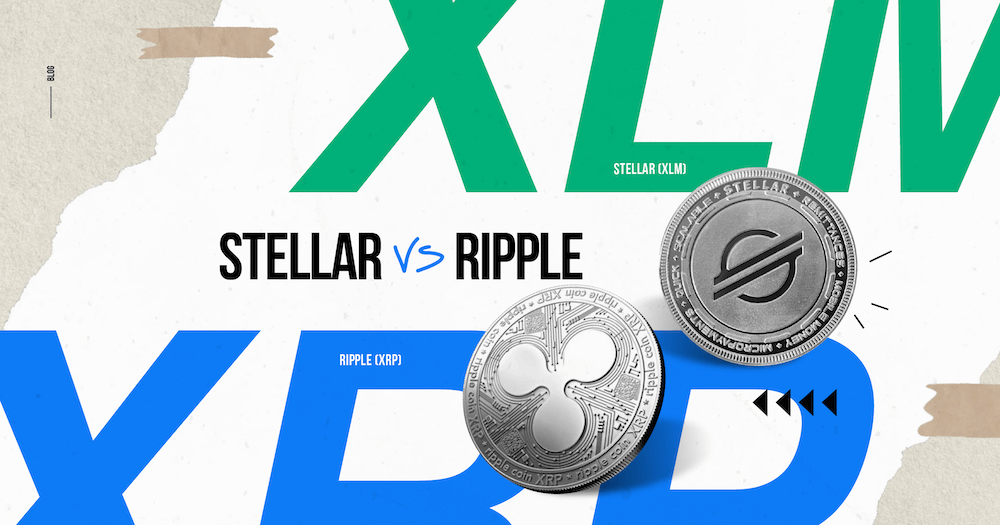
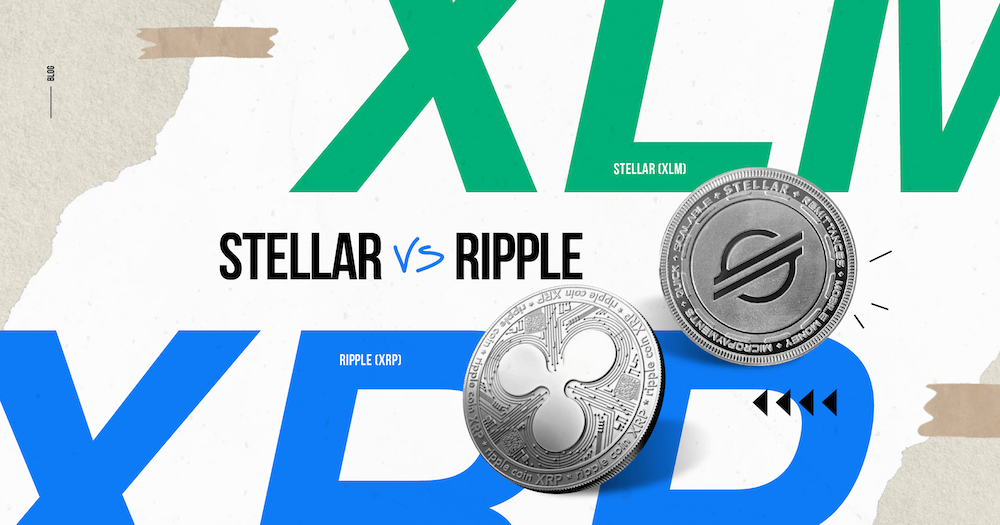
XRP and XLM are two of the most prominent cryptocurrencies focused on enabling fast, low-cost cross-border payments. While they serve similar functions in facilitating financial transactions, their core missions, target audiences, and tokenomics set them apart.
Stellar (XLM) is an open-source network designed to help the unbanked and underserved populations access financial services. Ripple (XRP), on the other hand, focuses on enterprise-level solutions, providing financial institutions and banks with a scalable, secure, and rapid transaction infrastructure.
In this comparison guide, we’ll explore the similarities and key differences between XRP and XLM—and help you determine which cryptocurrency might align better with your investment goals.
What Is Ripple (XRP)?
Ripple is a blockchain-based digital payment protocol developed by Ripple Labs in 2012. Its primary aim is to streamline global money transfers for banks, payment providers, and other financial institutions.
At the core of Ripple’s ecosystem is the XRP Ledger, a decentralized blockchain maintained by a network of independent validators. The system is known for its impressive transaction speed—typically settling transactions within seconds—and extremely low fees. As a result, Ripple has become one of the top cryptocurrencies by market capitalization.
Although Ripple is often described as decentralized, it has faced criticism for being relatively centralized compared to other blockchain projects. It’s also currently involved in a high-profile legal case with the U.S. Securities and Exchange Commission (SEC), which has impacted its adoption and price trajectory.
What Is Stellar (XLM)?
Stellar is a decentralized payment network founded in 2015 by Jed McCaleb—one of Ripple’s original co-founders—and the Stellar Development Foundation. Stellar’s mission is to build an inclusive financial system that connects people, payment systems, and banks—particularly in underbanked regions.
Using the Stellar Consensus Protocol (SCP), the network enables users to issue, send, and trade digital assets quickly and at a minimal cost. Stellar is open-source and designed for accessibility, making it ideal for small businesses, fintech apps, and individuals who need an alternative to traditional banking systems.
Its growing list of strategic partnerships—including with IBM, Circle, and MoneyGram—reflects its increasing utility in real-world financial applications.
Key Similarities Between XRP and XLM
1. Fixed Supply
Both XRP and XLM have a capped supply. XRP is limited to 100 billion tokens, while XLM initially also had 100 billion, but later reduced its supply to 50 billion through a token burn. Neither network supports mining; all coins are pre-mined.
2. Low Transaction Fees
Both platforms offer extremely low-cost transactions, making them well-suited for high-volume and micro-transactions alike. This is a major advantage over traditional remittance services and many other blockchain networks.
3. Fast Transaction Times
XRP and XLM both process transactions in 5–10 seconds on average, offering near-instant global payments that far outperform traditional banking systems.
Major Differences Between XRP and XLM
1. Core Mission
Ripple is focused on modernizing the global financial infrastructure, especially for large financial institutions. Stellar, meanwhile, focuses on financial inclusion—bridging the gap for the billions of people worldwide without access to basic banking services.
2. Target Market
XRP’s ecosystem is enterprise-centric, partnering with financial giants like Western Union and previously American Express. Stellar, by contrast, works with organizations like IBM and Circle to facilitate affordable remittances and digital payments in emerging markets.
3. Consensus Mechanism
Ripple uses the Ripple Protocol Consensus Algorithm (RPCA), while Stellar operates on the Stellar Consensus Protocol (SCP). Both offer faster and more energy-efficient alternatives to Bitcoin’s Proof-of-Work system, but Stellar’s consensus model is generally considered more decentralized.
4. Legal Status and Centralization
Ripple has faced legal scrutiny, particularly from the SEC, which argues that XRP may be classified as a security. Stellar has largely avoided such controversies and is seen as more decentralized in both governance and technical structure.
5. Token Distribution
XRP’s distribution is controlled by Ripple Labs, with a large portion still held by the company. Stellar originally launched with 100 billion XLM, but burned 50 billion in 2019 to simplify its tokenomics and address distribution concerns.
XRP vs XLM: Which Is the Better Investment?
For Investors Seeking Rapid Growth
XRP may appeal to those looking for high upside potential—especially if Ripple wins its ongoing legal battle with the SEC. The company’s institutional partnerships and market reach could drive significant value if regulatory clarity is achieved. Some analysts speculate XRP could even reach double or triple-digit values over time, although this is highly speculative and hinges on legal outcomes.
For Long-Term Stability
XLM, in contrast, may offer a steadier investment path. Its mission of financial inclusion, combined with increasing partnerships with companies like Visa, Tala, and MoneyGram, suggests consistent growth potential. The recent announcements of these partnerships caused a 13.4% spike in price—hinting at the project’s growing traction.
It Depends on Your Risk Tolerance
If you’re comfortable with higher risk and chasing potential high returns, XRP could be worth the gamble. If you prefer gradual, mission-driven growth and less regulatory risk, XLM may suit your portfolio better.
Should You Buy XRP and XLM?
Like any investment, the decision to buy XRP, XLM, or both should be based on your individual financial goals, risk appetite, and market outlook.
Diversifying across both assets might provide a balanced approach: leveraging XRP’s potential upside while benefiting from XLM’s stability and long-term adoption prospects. Both tokens are available on major cryptocurrency exchanges and are supported by most wallets.
Final Thoughts: XRP and XLM Each Have Unique Strengths
Both Ripple and Stellar offer innovative solutions to outdated financial systems. XRP shines in the institutional banking world, enabling large-scale, cross-border payments with speed and efficiency. XLM, on the other hand, is a powerful tool for democratizing access to finance—especially in emerging markets.
As an investor, choosing between them—or opting for both—depends on your goals. Are you betting on Ripple’s institutional future? Or do you believe in Stellar’s vision of inclusive finance? Either way, both cryptos represent real-world use cases and offer compelling value in today’s evolving digital economy.



What do you think? Share your thoughts below!